

All roads lead
back to
Albuquerque.
The RV. The ponytail. The choices you’re still arguing about. Go deeper into Breaking Bad and Better Call Saul, then find the art that gets the reference.

Pick your side of the story.
The empire has a cost.
Walt’s hunger for control. Jesse’s conscience. Skyler’s impossible position. Follow the gap between what people say they’re doing and what their choices reveal.
Read the Walt case file ↓Every shortcut leaves a mark.
Jimmy and Kim make the con look effortless. The consequences are anything but. Look closer at identity, performance, and the small decisions that become a life.
Read the Kim case file ↓What comes after survival?
Jesse’s story continues beyond Breaking Bad. Keep the ending intact on a first watch, then return for the way memory changes the meaning of escape.
Find your watch order ↓The details are the story.
Open a file only when you’ve reached its spoiler marker. Episode references are on-screen evidence; interpretations are our readings, not claims about the creators’ intent.
FILE 01The danger speech is a warning.
Spoilers: Breaking Bad through S4 E6, “Cornered”
The line works so well on a shirt that it’s easy to forget who Walt is talking to. This isn’t a showdown with a rival. It’s a conversation with Skyler, who is worried about the danger surrounding their family. He answers that fear with a performance of power.
That setting changes everything. Walt needs to be seen as indispensable: the man whose talent keeps an enormous business alive. But insisting that he controls the danger doesn’t make his home safe. It makes Skyler’s concern more immediate. Watch the distance between his account of himself and her experience of him.
Our reading: the scene is a portrait of ego defending itself against vulnerability. The bravado is memorable; the reaction is the evidence. On a rewatch, give Skyler as much attention as the speech.
REWATCH PROMPT / Who is this speech supposed to reassure—and does it succeed?
DESIGN CONNECTION / The store’s I Am The Danger jewelry and apparel turn that recognizable line into a visual reference.
FILE 02A whole relationship, inside an RV.
Spoilers: Breaking Bad through S3 E6, “Sunset”
The RV is a workplace, a hiding place, and a terrible substitute for a plan. Its cramped interior makes Walt and Jesse’s partnership physical: neither can keep much distance from the other, or from the consequences of being there.
In “4 Days Out” (S2 E9), isolation strips their partnership back to dependence. Walt’s technical confidence and Jesse’s improvisation have to coexist. The desert gives them space without giving them freedom. Their bickering can be funny, but the need underneath it is real.
By “Sunset,” the RV is evidence that can’t be allowed to survive. Losing it is practical, but the scene also closes a chapter in their shared life. A shabby vehicle has accumulated the emotional weight of a home neither would call home.
REWATCH PROMPT / Track who needs whom in each RV scene. Does the balance stay where Walt thinks it does?
DESIGN CONNECTION / The RV Enamel Mug, Let’s Cook Tee, and RV Hoodie all exist in the current store.
FILE 03Kim Wexler is never just the sensible one.
Spoilers: Better Call Saul through S6 E7, “Plan and Execution”
Kim’s precision makes it tempting to cast her as the person who will keep Jimmy in line. That misses her agency. She isn’t simply watching his choices. She has desires, grievances, and an appetite for risk of her own.
The Howard scheme exposes the limits of reading competence as goodness. A plan can be ingenious, meticulously executed, and still cruel. “Plan and Execution” asks us to sit with how enjoyable the mechanics of a con can feel while another person absorbs the harm.
In AMC’s interview about the episode, writer-director Thomas Schnauz discusses the audience’s attachment to Jimmy and Kim even as their behavior becomes appalling. Our reading: the show makes viewers participants in that moral blind spot. The question isn’t only how far the characters will go. It’s how long we’ll keep cheering.
REWATCH PROMPT / At what moment did you stop treating Howard as an obstacle and start seeing him as the target?
DESIGN CONNECTION / The Kim Mug and The Kim Wexler canvas celebrate a character worth arguing about.
Read Schnauz’s AMC interview ↗ · Contains the episode’s major spoilers.
FILE 04Jimmy. Saul. Gene. Who’s underneath?
Spoilers: Better Call Saul through the S6 opening
A new name can be a business decision, a survival strategy, or an escape from a version of yourself you can’t bear to face. Better Call Saul keeps testing those possibilities against the same person.
Peter Gould told AMC that the writers asked what problem becoming Saul Goodman solves. That’s a useful rewatch lens. Instead of treating the loud suits as the inevitable destination, look for the particular pain or desire each performance addresses. What does Jimmy get to avoid when Saul does the talking?
The Season 6 opening surrounds the absent man with possessions. The display of wealth can look like a complete explanation until a small remnant of Kim complicates it. Our reading: the objects hold the emotional evidence that the persona tries to conceal. A character’s identity isn’t settled just because the stationery has changed.
REWATCH PROMPT / Separate each name from its audience. Who is the performance for, and who still recognizes the person behind it?
Read Peter Gould’s AMC interview ↗ · Season 6 discussion.
FILE 05The confession hidden inside “Problem Dog.”
Spoilers: Breaking Bad through S4 E7, “Problem Dog”
Jesse tells his support group about killing a dog. The audience knows the confession is displaced: he’s talking around killing Gale. The substitute lets him speak without telling the room the literal truth, but it also stops the room from understanding what he needs to confess.
Aaron Paul chose this scene as a favorite in AMC’s cast retrospective, describing it as an opportunity for Jesse to partly confess. Our reading: the scene’s pain comes from the collision between an honest emotional need and a deliberately false account of the event.
Watch what happens when the group’s response doesn’t deliver the judgment he seems to be seeking. The scene belongs to the series’ larger argument about responsibility: being able to explain an action isn’t the same as being able to live with it.
REWATCH PROMPT / Is Jesse asking to be understood, forgiven, or condemned? What changes if you watch the scene with each possibility in mind?
Read AMC’s cast scene retrospective ↗ · Contains spoilers across Breaking Bad.
FILE 06Jane deserves more than a plot summary.
Spoilers: Breaking Bad through S2 E12, “Phoenix”
Jane arrives with her own taste, creative practice, boundaries, and history. Her relationship with Jesse matters partly because it briefly offers him a life that isn’t organized around Walt. The drawing, the humor, and the ordinary time together make that alternative feel tangible.
“Phoenix” is devastating because a person becomes the site of someone else’s decision. Watch Walt’s pause without allowing his later explanations to overwrite what the scene shows. The distinction between witnessing, choosing, and rationalizing is central to the series.
Our reading: reducing Jane to what her death does for two men repeats the very loss of perspective the episode makes so troubling. A rewatch should give her earlier scenes room to breathe. See the artist and the person before returning to the tragedy.
REWATCH PROMPT / What do we learn about Jane when neither Walt’s ambitions nor Jesse’s future is the center of the frame?
DESIGN CONNECTION / The Jane Tote Bag, Jane Notebook, and Jane Phone Case are existing store designs.
Evidence notes & further reading
Scene references: Breaking Bad, “4 Days Out” (S2 E9), “Phoenix” (S2 E12), “Sunset” (S3 E6), “Cornered” (S4 E6), and “Problem Dog” (S4 E7); Better Call Saul, the Season 6 opening and “Plan and Execution” (S6 E7). Commentary above is original Heisenberg Says fan analysis. Creator and cast observations link to AMC at the point of use. Source pages may spoil more than the file you opened.
Wear your obsession.
Or put coffee in it.
Real designs from the Heisenberg Says catalog. Choose a product to see its current price, options, and availability.
The RV Enamel Mug
View product & options ↗
The Kim Mug
View product & options ↗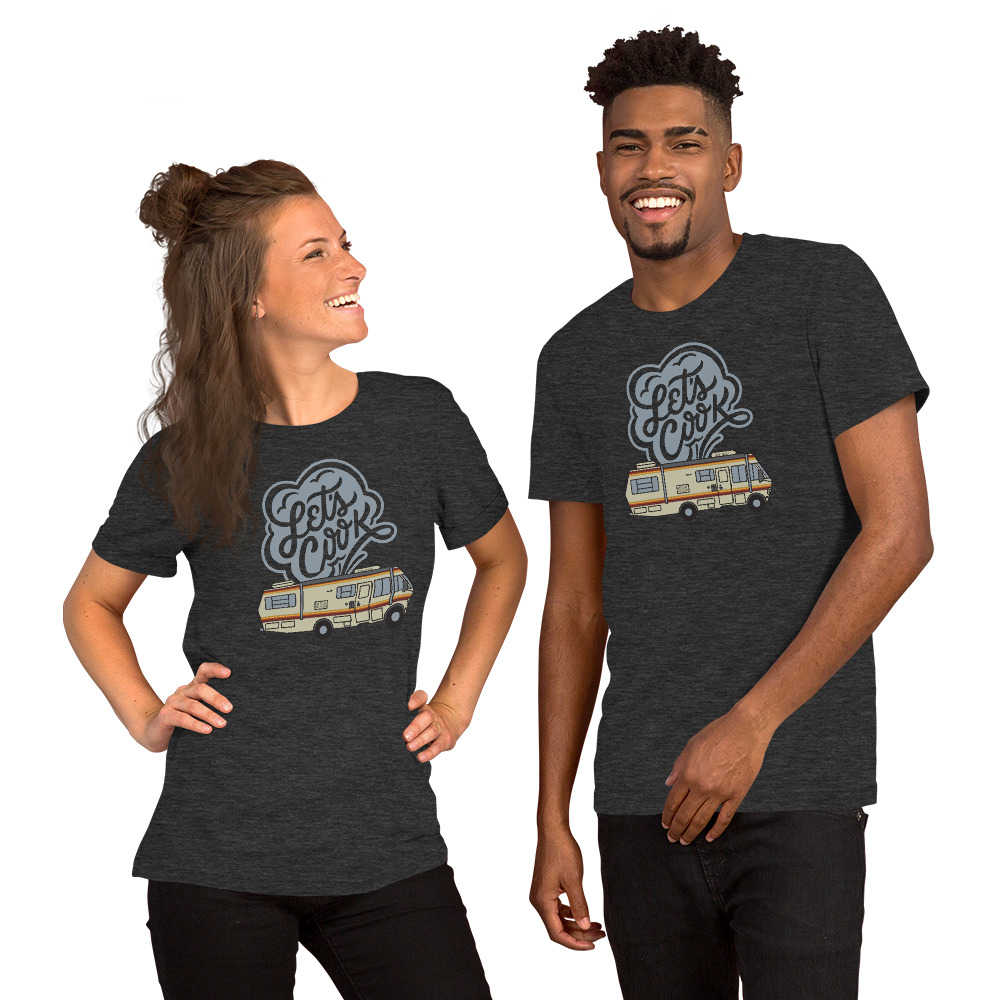
The Let’s Cook Tee
View product & options ↗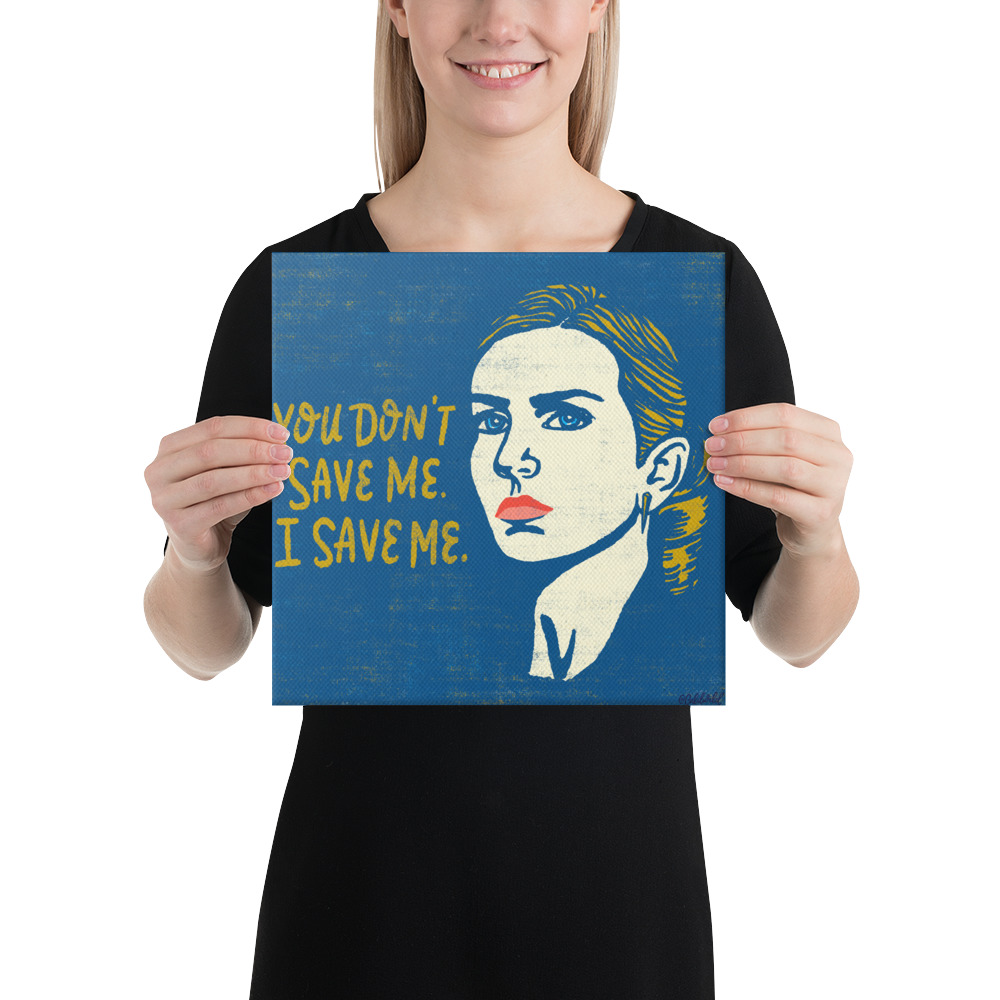
The Kim Wexler
View canvas sizes ↗
The Jane Tote Bag
View product & options ↗
The Lotería Notebook
View product details ↗
I Am The Danger Necklace
View finishes & details ↗
Vamonos Pest Soy Candle
View scent & product details ↗Explore the Breaking Bad Store ABQ in Albuquerque for more merchandise. It’s a separate store with its own selection, checkout, and availability.
Your first trip
to the 505?
Our recommendation for a first watch: finish Breaking Bad, follow Jesse into El Camino, then settle into Better Call Saul. This keeps the original series’ discoveries intact and lets the later stories deepen what you’ve seen.
This is a viewing recommendation, not broadcast release order. Better Call Saul began before El Camino was released. A strict chronological edit also cuts across flashbacks, flash-forwards, and reveals; save that experiment for a rewatch.
- Breaking BadAll five seasons. Follow the choices in the order the original story gives them to you.
- El CaminoThe film follows Jesse’s story after Breaking Bad. Watch after the series finale.
- Better Call SaulAll six seasons. Its story reaches beyond a simple prequel. Keep the finale unspoiled.
Were you paying attention?
Three rewatch prompts. Answers reveal spoilers only through the episode listed.
In “Cornered,” who is Walt actually addressing?Breaking Bad · S4 E6
Skyler. The speech’s domestic setting is essential: the person he wants to reassure is the person his display of power frightens. Reopen File 01 with her reaction in mind.
Whose death sits behind Jesse’s story in “Problem Dog”?Breaking Bad · S4 E7
Gale Boetticher’s. Jesse substitutes a dog for the person he killed. The group can respond only to the story he tells them, not the event the audience knows.
Is Better Call Saul only a prequel?Structure only · no ending revealed
No. Its story includes periods before and after Breaking Bad. That is why a simple “prequel first” watch order misses how the series uses the audience’s knowledge.
Find your next
rabbit hole.
Find out what Heisenberg says next.
Sign up for Heisenberg Says emails about new products and fan content.